Waiting for the cell and gene therapy industry to evolve on its own timeline isn’t a strategy, it’s a delay. The technologies work. The proof exists. Every therapy that reaches a patient who had no other option is evidence that this industry’s promise is worth pushing for, together. That belief is why CellBri partnered with Hope Is Not A Workflow last year, and why we’re returning as a sponsor for its third symposium this August.
Why Hope Is Not A Workflow Exists
Hope Is Not A Workflow was founded by Priya Baraniak, Pluristyx, Jenn Henry, Teknova, and Jessica Wanamaker, Bio-Techne, to fill a gap the industry felt but rarely addressed directly: a space for open, unguarded conversation in a field where collaboration is essential but often gets crowded out by competition.
As Wanamaker puts it, “The HOPE Symposium was created around a simple belief: when we bring passionate people together with a shared purpose, incredible things can happen. Science moves faster through collaboration than competition, and some of the most impactful ideas are born in the conversations between sessions, over coffee, or during a chance introduction. We wanted to create an environment where researchers, clinicians, industry leaders, and innovators could openly exchange ideas, challenge one another, and build the relationships that ultimately lead to better science and better outcomes for patients. That’s what HOPE is all about.”
That framing lines up closely with CellBri’s own mission: building the automation infrastructure that lets cell and gene therapy developers move from bench to patient without losing time, control, or quality along the way. It’s why CellBri has joined Bioterra, Defined Bioscience, Mytos, and iOrganBio as a sponsor of the symposium series.
What the March Symposium Surfaced
The second Hope Is Not A Workflow event, held at BiotechNC RTP in March 2026, drew roughly 100 industry professionals and produced conversations that have since been recapped widely across the field. A few themes stood out and set real expectations for what August will bring.
Education kept surfacing as foundational, not optional. Even with multiple commercially approved cell therapies on the market, understanding gaps persist across the ecosystem, among solution providers, physicians, and patients alike. Panelists pointed to access and cost as the practical barriers behind that gap: community hospitals often lack the infrastructure or confidence to administer these therapies, and patients themselves may not know the option exists.
Collaboration came up not as a soft value but as an operational necessity. Speakers described the shift from isolated tools and vendors toward integrated, end to end platforms that connect
logistics, manufacturing, and patient delivery so problems can be caught before they become setbacks. And when asked what topic deserved its own future session, one recurring answer was resilience: the industry has absorbed scientific setbacks, regulatory complexity, and public skepticism, and continues to move forward anyway.
These aren’t isolated observations. They reflect where the broader industry conversation has been heading, and they set the stage for what CellBri expects to hear echoed, and pushed further, in August.
What’s Next: Failing Forward in San Diego
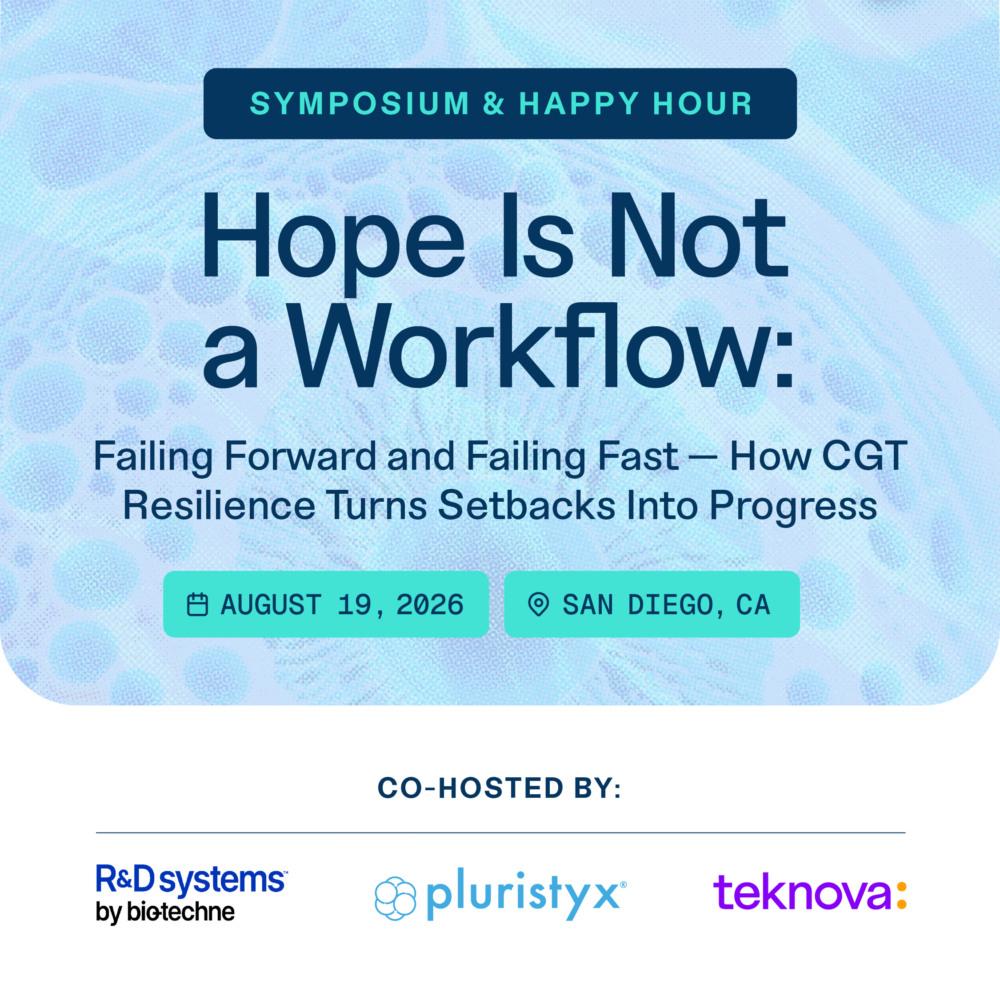
The third symposium, Hope Is Not A Workflow: Failing Forward and Failing Fast, How CGT Resilience Turns Setbacks Into Progress, takes place August 19 from 8am to 6:30pm at Bioterra in San Diego. Headlining speakers, Jerry Jiang, CellBri, and Karol Jarzabek, iOrganBio, will lead a day built around presentations, roundtables, and open brainstorming, the kind of pragmatic, unscripted format that has made this series valuable from the start.
Why We Show Up
CellBri speaks at events like this one for two reasons. First, to stay part of the conversation as a shared responsibility, not a marketing opportunity. Second, to keep learning from the community so we can build better tools for it. Every setback the industry works through in a room like decreases the delay between a technology that works and a patient who needs it.
The industry doesn’t move forward on hope alone. It moves forward when the people building its infrastructure show up, in person, at the table. That’s the case CellBri is making by sponsoring Hope Is Not A Workflow, and it’s the case we’ll keep making in San Diego this August.
Follow us on LinkedIn to stay connected as we continue to build the future of cell therapy manufacturing.